The hustle narrative is everywhere. Grind harder. Sleep less. Push through. Winners don't rest.
It sounds motivating. But as a performance strategy, it has a significant flaw: it doesn't work long-term.
The men who perform at high levels consistently — whether in the gym, at work, or in life — understand something different. Performance isn't primarily about willpower. It's about systems.
The Willpower Fallacy
Willpower is a finite resource. It depletes with use, recovers with rest, and is influenced by blood sugar, sleep, stress, and hormones.
Relying on willpower means:
- Performance varies based on mood and circumstances
- Every day is a mental battle
- Consistency is hard to maintain
- Burnout is always around the corner
High performers don't have more willpower than everyone else. They just rely on it less.
The Systems Approach
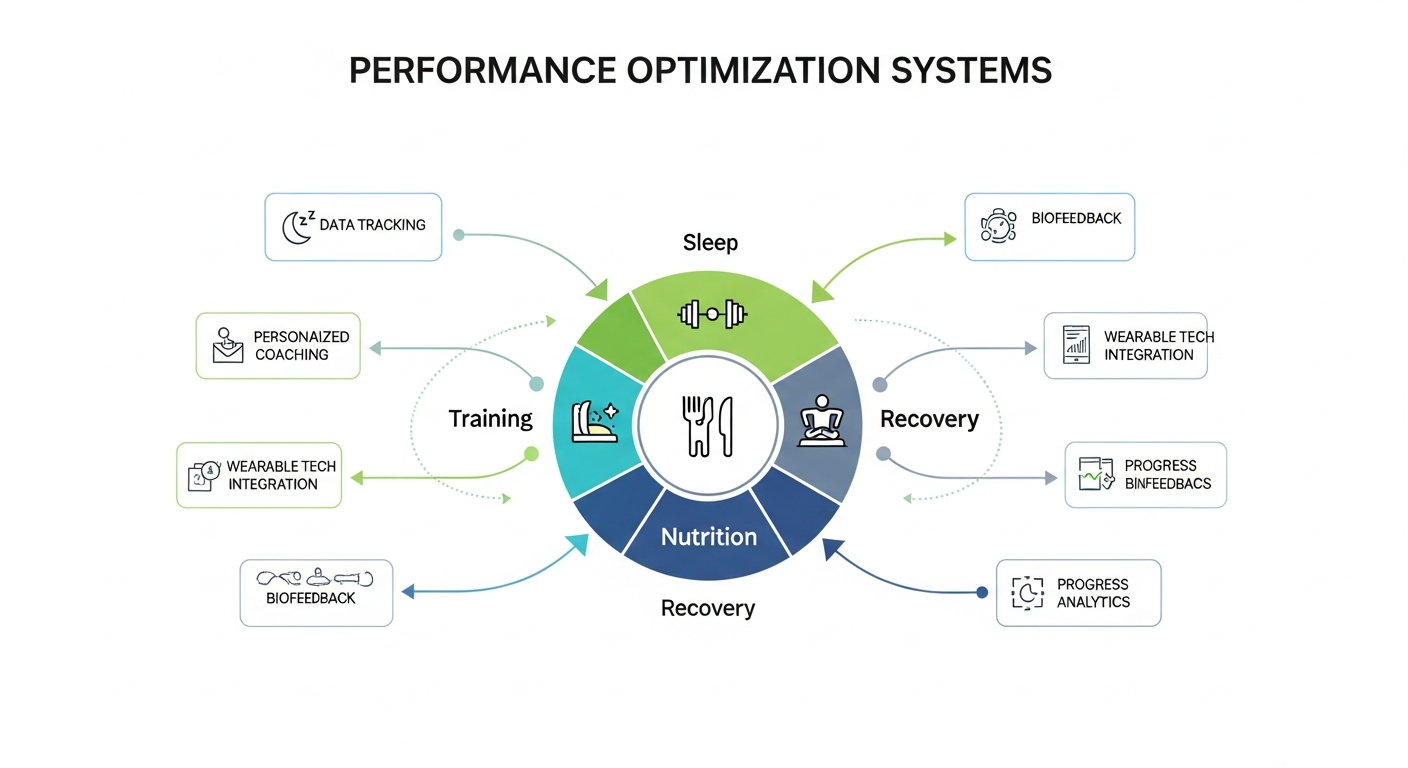
Instead of fighting for motivation every day, systems create conditions where good performance happens naturally.
System 1: Sleep
Sleep is the foundation of performance. During sleep:
- Growth hormone is released for tissue repair
- Memories are consolidated (including motor learning)
- Immune function is restored
- Hormonal balance is maintained
Poor sleep makes everything harder. Good sleep makes everything easier.
System 2: Hormonal Balance
Your hormones regulate:
- Energy levels and fatigue
- Muscle building and fat loss
- Motivation and drive
- Recovery capacity
- Mood and mental clarity
Optimised hormones = optimised performance potential. Fighting against suboptimal hormones with willpower is exhausting.
System 3: Nutrition
Proper nutrition provides:
- Fuel for training and daily activities
- Building blocks for muscle and tissue repair
- Micronutrients for enzymatic processes
- Stable blood sugar for consistent energy and focus
Good nutrition systems reduce decision fatigue and ensure you're fuelled properly.
System 4: Recovery
Structured recovery ensures:
- Training adaptations actually occur
- Fatigue doesn't accumulate
- Injury risk stays low
- Performance can be sustained
Recovery isn't optional — it's where improvement happens.
System 5: Stress Management
Chronic stress impairs everything:
- Sleep quality
- Hormonal balance
- Recovery
- Decision-making
- Immune function
Systems for managing stress (not eliminating it) protect performance.
What Doctors Look at When Performance Stalls
When men come to us because performance isn't where they want it, we look at the systems:
Blood Work
- Testosterone (total and free)
- Thyroid function
- Inflammatory markers
- Nutrient levels (iron, vitamin D, etc.)
- Metabolic markers
Lifestyle Assessment
- Sleep quality and duration
- Training load and recovery balance
- Stress sources and management
- Nutrition patterns
Symptom Review
- Energy patterns throughout the day
- Recovery speed
- Mental clarity and focus
- Mood and motivation
This comprehensive view identifies which systems need attention.
The Performance Stack
Think of performance like a building. Each system is a floor:
- Foundation — Sleep quality
- Structure — Hormonal balance
- Fuel — Nutrition
- Maintenance — Recovery
- Protection — Stress management
- Output — Training and performance
If lower floors are weak, upper floors can't be built properly. Trying to build the top floor while ignoring the foundation leads to collapse.
Ready to Optimise Your Systems?
If performance isn't where you want it despite effort and willpower, it might be time to look at the systems underneath.
What Doctors Look at When Performance Stalls
Build the foundation. Optimise the systems. Sustain the performance.
Systems over willpower. Consistency over intensity. Long-term over short-term.