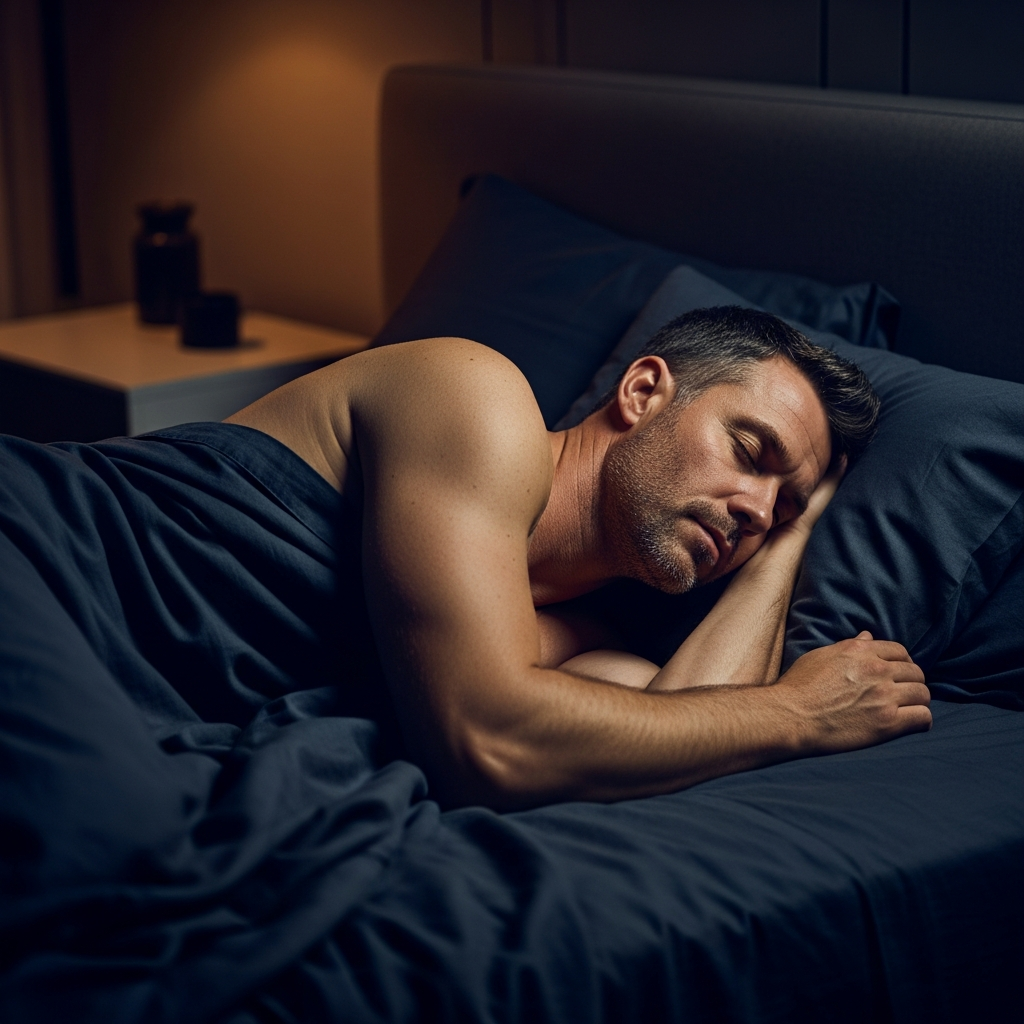
If you could only fix one thing for your health this year, sleep would beat almost anything else on the list. It's the single biggest lever in men's health — and the most underrated.
Most men don't have a "sleep problem" because they don't have a sleep strategy. Here's what the research says actually matters, and how to build a sleep approach that supports testosterone, recovery and long-term health.
What Sleep Actually Does for Men
Testosterone Production
The majority of your daily testosterone production happens during sleep — particularly during REM. One week of restricted sleep (5 hours/night) can drop testosterone by 10–15% in healthy young men. Compounded over years, that's substantial.
Growth Hormone & Recovery
Growth hormone is released in pulses during deep (slow-wave) sleep. Less deep sleep means less recovery, slower tissue repair and reduced body composition adaptation from your training.
Insulin Sensitivity
Even one night of poor sleep noticeably reduces insulin sensitivity. Chronic poor sleep is one of the fastest paths to metabolic dysfunction and weight gain.
Cognitive Function & Mood
Memory consolidation, emotional regulation, focus, decision-making — all dependent on sleep. The link between poor sleep and mood disorders is well established.
Cardiovascular Health
Sleep deprivation elevates blood pressure, inflammatory markers and cardiovascular risk over time.
How Much Sleep Do You Actually Need?
For most adult men: 7–9 hours per night. Less than 6 hours consistently is associated with measurable health consequences. "Short sleeper" genetics exist but are rare — most men who think they're fine on 5 hours have just normalised feeling tired.
The Foundations of Better Sleep
1. Consistent Sleep & Wake Times
Your circadian rhythm responds to consistency. Same bedtime, same wake time — every day, including weekends. This single change improves sleep quality more than most supplements.
2. Morning Sunlight
10–20 minutes of bright light within an hour of waking anchors your circadian rhythm and improves sleep that night. In Australian summer, even early sunlight is plenty.
3. Cool, Dark, Quiet Bedroom
Body temperature needs to drop for sleep onset. Aim for 17–19°C. Black-out curtains, no electronics, white noise if needed.
4. Caffeine Cut-Off
Caffeine has a 5–7 hour half-life. A 3pm coffee leaves significant caffeine in your system at 10pm. For most men, no caffeine after 2pm.
5. Alcohol
Alcohol fragments sleep, suppresses REM and reduces overall sleep quality — even if you fall asleep faster. The biggest single sleep saboteur for many men.
6. Screens & Light
Bright light in the evening suppresses melatonin. Dim your environment in the last hour, get screens off the face, consider amber lights or blue-blocking glasses if you can't avoid them.
7. Eat Earlier
Late, heavy meals impair sleep quality and recovery. Try to finish dinner 2–3 hours before bed.
The Recovery Layer (For Trained Men)
If you train hard, sleep needs go up. Most athletes benefit from:
- Adding 30–60 minutes to nightly sleep on training days
- Strategic 20-minute naps when sleep is short
- Tracking sleep quality (not just quantity) — wearables can help
When to Investigate Further
Some sleep issues need clinical investigation, not just better habits:
- Loud snoring + daytime fatigue + waking gasping — Suggests sleep apnoea. Get a sleep study.
- Falling asleep fine but waking at 3am unable to sleep — Often cortisol/stress-related. Worth investigating.
- Restless legs, leg cramps, frequent urination at night — Each has its own causes worth exploring.
- Chronic fatigue despite "sleeping enough" — Could be hormonal, thyroid, iron, or sleep quality (not quantity).
Where Supplements Fit
Used smartly, supplements can help — but they're not the foundation:
- Magnesium glycinate — A safe, well-tolerated option for sleep onset and depth
- Glycine (3g) — Supports sleep quality and morning alertness
- Melatonin (low dose, short term) — Best for jet lag or shifting your sleep window — not nightly
- L-theanine — Useful for racing-mind evenings
Supplements should be the last 5%, not the first 95%. Fix consistency, light, caffeine and alcohol first.
Sleep and Hormones — When to Get Bloods
If you're sleeping 7–8 hours a night with good habits and still waking unrefreshed, fatigued during the day, low libido, low motivation — bloods are warranted. Sleep is often the symptom, not the cause. Low testosterone, thyroid issues, iron deficiency and other treatable conditions can all present as poor sleep.
The Bottom Line
Sleep is the foundation that everything else — training, hormones, body composition, mood, longevity — is built on. The men who train hard, eat well and ignore sleep are leaving most of the gains on the table.
Fix consistency, light, caffeine and alcohol first. Add supplements if needed. And if quality sleep still isn't restoring you, get bloods done — there's likely something underneath worth addressing.
Disclaimer: This article is for educational purposes only and isn't medical advice. Persistent sleep issues should be discussed with an AHPRA-registered medical practitioner.